Seville: A City That Enchants at First Sight
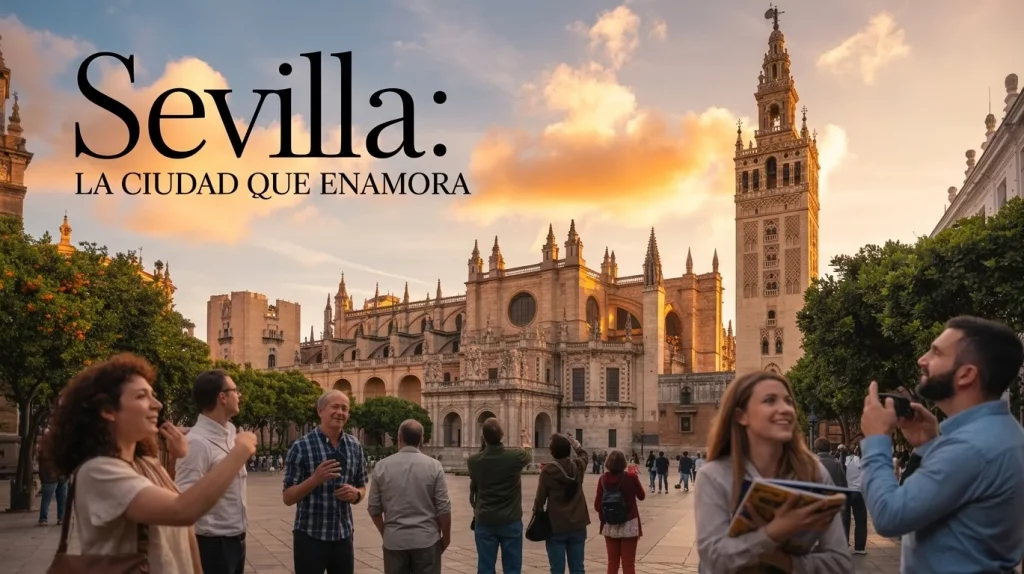
There are cities that steal your heart at first glance. Seville is one of them. Its skyline, dominated by the Giralda tower, the scent of orange blossom in spring, its quiet courtyards and centuries-old taverns all come together to create an experience that is simply impossible to forget. It is no surprise that travellers from every corner of the globe choose Seville year after year as one of their must-visit destinations in Europe.
Its historical and monumental heritage — with the Cathedral, the Royal Alcázar and the Archive of the Indies as the centrepiece of a complex declared a UNESCO World Heritage Site — together with its unique scenic and cultural spaces, make Seville a city that welcomes both national and international visitors in ever-growing numbers.
For those looking to go beyond the standard sightseeing experience, a private tour of Seville allows you to explore each of these sites in depth, at your own pace and with the personalised attention that only an exclusive experience can offer.
Seville Enchants the World: Why International Travellers Keep Choosing It
International tourism is today the main driving force behind Seville’s visitor economy. More than 60% of overnight stays in the city are by foreign visitors — a figure that speaks for itself when it comes to the universal appeal of Andalusia’s capital beyond Spain’s borders.
Where do they come from? Primarily from France, Italy, the United Kingdom, the United States and Germany, as well as Portugal, the Netherlands and Belgium. American travellers deserve a special mention: they top the rankings for average spending and arrive looking for exactly what Seville has in abundance — history, culture, gastronomy and authenticity. Asian markets, particularly China and South Korea, are growing steadily and bring a profile of high-spending cultural travellers who find in Seville a city that manages to surprise them around every corner.
None of this would be possible without an air connectivity that continues to improve. San Pablo Airport is recording historically high passenger numbers, with direct connections to the major European and transatlantic markets, and keeps opening new routes that bring Seville within reach of travellers from anywhere in the world.
Visiting Seville in Spring: Holy Week, the April Fair and the Spirit of National Tourism
Spanish visitors have a very special, almost sentimental relationship with Seville. The city is one of the most beloved domestic destinations in the country, and its peak moment arrives each spring with Holy Week and the April Fair — two celebrations unique in the world that transform Seville into Spain’s emotional and cultural epicentre for weeks at a time.
In summer, however, national demand shifts towards the coast. The beaches of Cádiz and Málaga compete strongly against an inland city where temperatures can be off-putting for those who do not know the tricks to enjoying it during that season. This creates a clear seasonal pattern for Spanish visitors, concentrated largely in spring and autumn — the times of year when Seville truly comes into its own.
How Many Days Do You Need to Visit Seville and Make the Most of It
Stay Longer, Spend More: The Destination’s New Goal. Seville doesn’t just want to attract more tourists; it wants them to stay longer. The current average stay is around two and a quarter nights, and both public institutions and the private sector are working to increase this. The formula combines a high-quality range of accommodation — with a notable concentration of five-star and luxury hotels — new cultural itineraries that go beyond the classic ‘monumental triangle’, and a firm commitment to deseasonalisation, that is, spreading tourist flows throughout the year. In this context, tours in Seville are establishing themselves as one of the key resources for enriching the visitor experience and encouraging a longer stay.
The result is a more sustainable model of tourism, one that generates greater wealth and employment without compromising the quality of life of Seville’s residents. Because Seville is not merely a backdrop for tourists: it is a living city, one that is best enjoyed slowly, with curiosity and a genuine desire to get to know it properly.
Frequently Asked Questions About the Monuments of Seville
What are the most important monuments in Seville that should not be missed?
The three essential must-sees are the Seville Cathedral — the largest Gothic cathedral in the world —, the Royal Alcázar — the oldest royal palace still in use in Europe and an official residence of the Spanish Royal Family — and the General Archive of the Indies, which holds the original documents of the conquest and colonisation of the Americas. All three form part of the same complex declared a UNESCO World Heritage Site in 1987. The Plaza de España, the Santa Cruz Quarter, the Torre del Oro and the Basilica of La Macarena are also highly recommended visits.
How much time is needed to visit the monuments of Seville?
To explore the main monuments at a comfortable pace, a minimum of two full days is recommended. The Cathedral and the climb up the Giralda can easily take two hours, the Royal Alcázar another two to three hours if you also walk through its gardens, and the Plaza de España together with the María Luisa Park deserves at least an hour and a half. If you want to explore neighbourhoods such as Triana or the Old Town at leisure, three to four days are ideal.
Is it necessary to book tickets to Seville’s monuments in advance?
Yes, especially during the high season — Holy Week, the April Fair, bank holidays and summer. Tickets for the Royal Alcázar sell out very frequently, and it is advisable to book several days or even weeks in advance through its official website. The Cathedral also offers advance booking and it is strongly recommended to avoid queues. Visiting at opening time or on weekdays helps you enjoy a much more relaxed experience.
What is the best time of year to visit the monuments of Seville?
Spring — from March to May — and autumn — from September to November — are the ideal seasons. Temperatures are pleasant, the light is spectacular and the city is in full cultural swing. In spring, visits also coincide with the major celebrations. Summer is the most challenging season due to the extreme heat, although the monuments can be visited perfectly well early in the morning or at dusk. Winter offers very little crowding and lower prices, with the added bonus of enjoying the spaces almost entirely to yourself.
Can the monuments of Seville be visited free of charge?
Some monuments offer free access during specific hours or on certain days. Seville Cathedral offers free entry on Mondays from 4:30 pm to 6:00 pm for visitors from the European Union. The Royal Alcázar has free entry on Mondays from 6:00 pm to 7:00 pm (October to March) or from 7:00 pm to 9:00 pm (April to September). The Plaza de España, the exterior of the Torre del Oro, the Santa Cruz Quarter and many of the city’s historic churches are freely accessible at all times. It is always advisable to check updated opening times on the official websites before your visit.